Wednesday, March 11, 2020

Fun Day

Last week we had a fun day that Mr Reddy organised for us..

We had


TUG OF WAR


VISIT WITH A POLICE CAR


BOUNCY CASTLES


WE MET THE WALKING SCHOOL BUS


WE SKIPPED


WE PLAYED SOFTBALL

We also played rippa rugby and had a two legged race.

Which was your favourite event?

Wednesday, February 19, 2020

Big 4 in the corridor

Here is our CREATE task for our PB4L lesson this week.


Tuesday, February 18, 2020

Buddy time (Term 1, Week 3)

Today Room 8 had their first buddy time with Room 1. 
Since we have 2 new school values, and of course our buddies are brand new to school (they are new entrant students), we did a session about the school values to help us all learn them and remember them.

First we got into groups and coloured in one of the school values. 
Next we brainstormed how to show that value either by drawing pictures or writing short statements.


Buddies both young and old worked together - great Ako everyone!


Then each group made a list of a few of their ways to show that value, and acted them out!
We only had 15 minutes to film the whole class - so it was a one take wonder! 

Check it out!


Comment below what your favourite moment of our video was!

Monday, February 3, 2020

First day of school 2020!

We had a great first day of school in 2020.

We got to know each other a bit, played a few games and learnt about the Treaty of Waitangi.

We read this book with our friends next to us. Some of us took notes as we went along to record new ideas - awesome!

Miss Ashley led us through a discussion comparing our prior knowledge to what we read.

Room 8’s prior knowledge

  • 6th Feb 18 something?
  • Both Europeans (Pakeha) and Maori signed the Treaty
  • 448 or 500 people signed it
  • There was different copies = people weren’t happy
  • 9 copies originally, 1 or 2 are left now.
  • Written by Maori.
  • They needed the treaty because of the war?
  • 3 principles - p, p and p??


After reading we made notes -

  • 52 Maori chiefs signed it.
  • The treaty was written in English, then translated into Te Reo Maori by Henry Williams and his son Edward. This was in ONE NIGHT. 
  • Hone Heke 
  • James Buzby 
  • 3 principles - protection, partnership and participation. 
  • Two versions - English and Te Reo Maori. Major differences include sovereignty/kawanatanga (who is governing the country),  who would own the land, and whether Maoris had the same rights as British citizen
We also made a timeline on the board of what happened when, just using keywords.

Next we made a chain, only having to remember one line each. You had to add on from what the person before you had said, so the ideas are all in order and tell the story of the Treaty.

Here is our chain -


Leave us a comment below with one thing you learnt about the Treaty of Waitangi! 

Tuesday, November 12, 2019

Manaiakalani Film Festival 2019

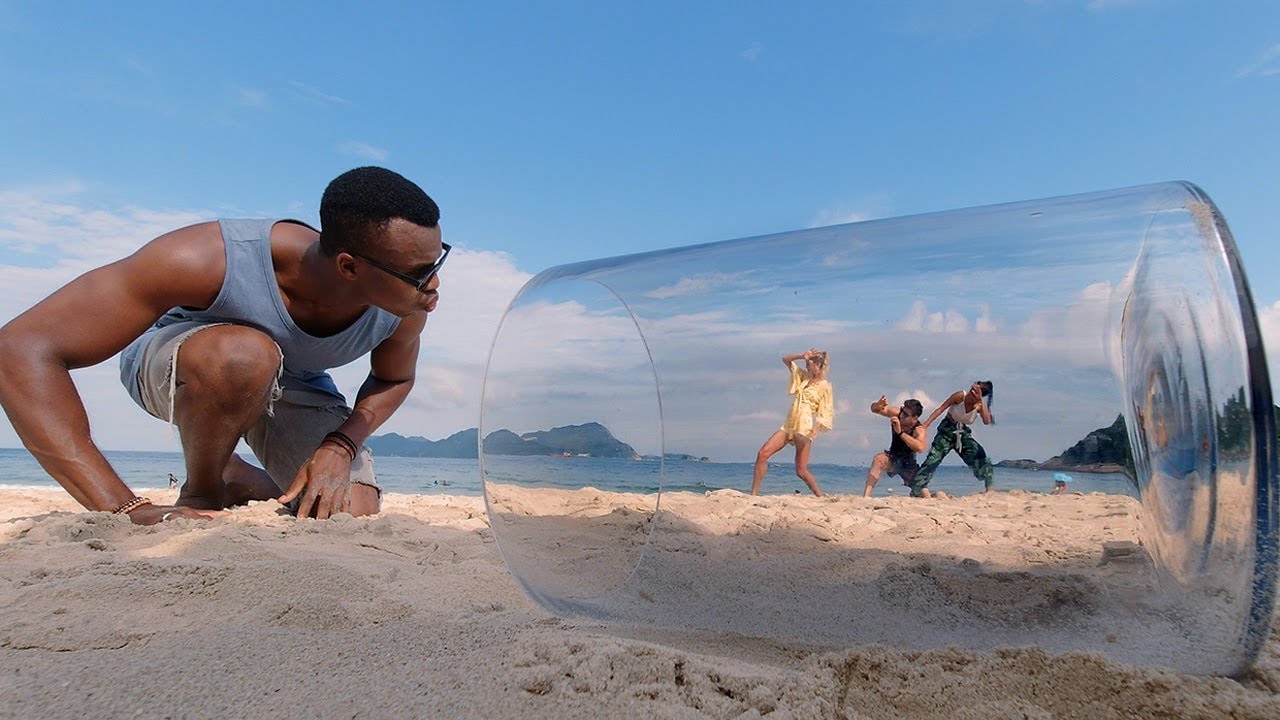
During Term 2 we were learning about perspective writing. To launch our unit, we looked at forced perspective photography that has been trending on Instagram and other social media platforms recently.

Such as these...

Image result for forced perspective

Image result for forced perspective

Image result for forced perspective

We decided to make our own forced perspective photos, and show the 'perceived' vs 'reality' of it. For us, this was also a metaphor for how different opinions about a certain topic can be misleading when you only listen to one perspective. 
Sensitive issues, such as the Christchurch attacks earlier in the year, are an example of how we should listen to each other and respect that we all have slightly different perspectives on a topic depending on who you are, where you stand and what you know.

Please enjoy our movie.


Tuesday, November 5, 2019

Big 4 in the corridor!


We made a movie to show what to do in the corridor! 


Tuesday, September 3, 2019

Special visitor during Tongan Language Week

We were very lucky today to have a special guest called Filipe Tohi, a famous Tongan artist. 


Monday, July 1, 2019

Dinosaurs information report.

Today we have to write an information report about dinosaurs. We know a lot, so its going to be very long! 

Here is our brainstorm for the paragraphs. 


Here is some finished student work.


Sunday, June 30, 2019

Dinosaur knowledge

Today we wrote down everything we have learnt about dinosaurs over the past 2 weeks. It was a lot!

Room 7
Dinosaur knowledge
Prior Knowledge
Animal
Predator
Dino is the root word
‘Saurs’ means something
Species 
Extinct 
Huge
Large bones
Long necks
Eggs 
Sharp teeth
Long tails
Eat people
Different kinds
Spikes
Horns
Mammals
4 legs


We learnt that...

 Bipedal means 2 feet and quadruped means 4 feet. Some dinosaurs are bipedal and some are quadrupeds. Some can change between the two stances. They are sturdy.
Theropod is a 3 clawed dinosaurs
Dinosaurs are warm-blooded, which means their blood temperature is always the same
Carnivore means a meat eater
Herbivore means a plant eater
Omnivore means it can eat plants and meat
Some dinosaurs are huge and some are small. Typically, huge dinosaurs were sluggish (slow). 
Dinosaurs died out 66 million years ago. They started existed 230 million years. 
They died because of an extinction event, most people think this was because a meteor hit the Earth. 
Dinosaurs legs go out the bottom of their hip bones, whereas reptiles bones go to the side of their hips. Reptiles do not have an extra hole in their skull, but dinosaurs do. 
Mary Anning found lots of fossils on a cliffside in England in the 19th century. She was born in 1799 and died in 1847. She survived a lightning strike as a baby. In 1824 she found the first fossil.

 Non-avian dinosaurs are dinosaurs that are not birds. Avian means birds.
Metabolism means how fast or slow your body converts food into energy
Diverse means a big range
Modifications means changes. Dinosaurs have modifications such as spikes, armour, horns or crests. 
Clade means family.
Lineage means ancestors/descendants 
Paleontologists are scientists that study ancient things including dinosaurs
There are 4 main groups of dinosaurs; theropods, sauropods, ankylosaurus and pterosaurs.
Titanoboa was top of the food chain after the dinosaurs died. It killed people by constricting people. It spent most of its time in the water because it was super heavy. It was 13m long, as big as a bus. 
Hominins existed when 7-6 million years ago, the first humans to walk on 2 feet. 
People did not exist when dinosaurs existed.


 Adaptation is something that changes over time. 
Ecology - how animals relate to each other
Fossils are made when dinosaurs die and their bones get trapped in rock or mud. The bones break down over time but leave a mould, which is filled with rock. This becomes the fossil. 
Dinosaurs sometimes eat each other. 
There were 3 periods of time that have dinosaurs. This is called the ‘age of dinosaurs’ also known as the ‘Mesozoic Era’; Triassic period, Jurassic period, and Cretasous period. 
Then there were 3 more periods in time, “Age of mammals”, also known as ‘Cenozoic Era’; Paleogene Period, Neogene period and  Quaternary period.
Dinosaur fossils have been found on every continent, including Antarctica.
Joan Wiffen found the first dinosaur fossil (a theropods tailbone) in NZ in 1975, in Hawkes Bay. She died in 2009. 
Dinosaurs laid eggs and they lived in family groups. 

Friday, June 28, 2019

Dinosaur reading

Next we started reading a really hard text about dinosaurs. Miss Ashley said it was written by adults for adults, so the language is really hard, but she wasn't going to baby us and rewrite it, we just had to learn the hard adult words. 

Here are some of the new words we found from the text.


In the text it talked about BC and AD, so Miss Ashley drew a timeline to explain what it means.